 English
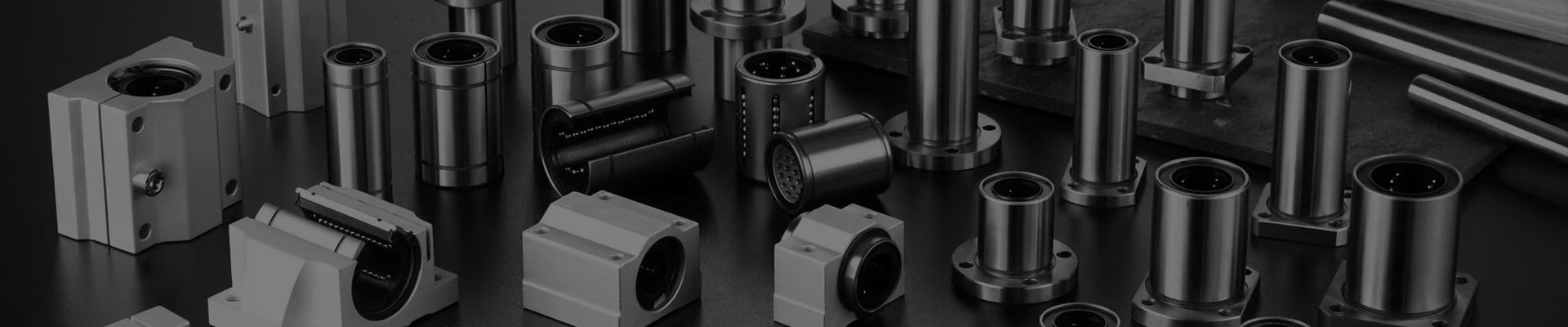
Linear bearings are a low-cost linear motion system used in conjunction with cylindrical shafts for unlimited travel. Because the load-bearing balls make point contact with the shaft, they have a low load capacity. The steel balls rotate with minimal friction, resulting in high-precision, smooth motion. Linear bearings are widely used in precision equipment such as electronic devices, tensile testing machines, and digital 3D coordinate measuring equipment, as well as in the sliding components of industrial machinery such as multi-axis machine tools, punch presses, tool grinders, automatic gas cutting machines, printers, card sorting machines, and food packaging machines.
Linear guides and linear bearings are fundamentally two different product components. A linear guide is an accessory track that transmits motion, providing reciprocating linear motion from a specified point to the next. The appearance of linear bearings and linear guides is significantly different. Linear bearings operate on cylindrical shafts (including various flanged linear bearing blocks), linear guide shafts, and linear circular guides (including linear guide bearing seat assembly sliding units and flanged guide shaft supports).
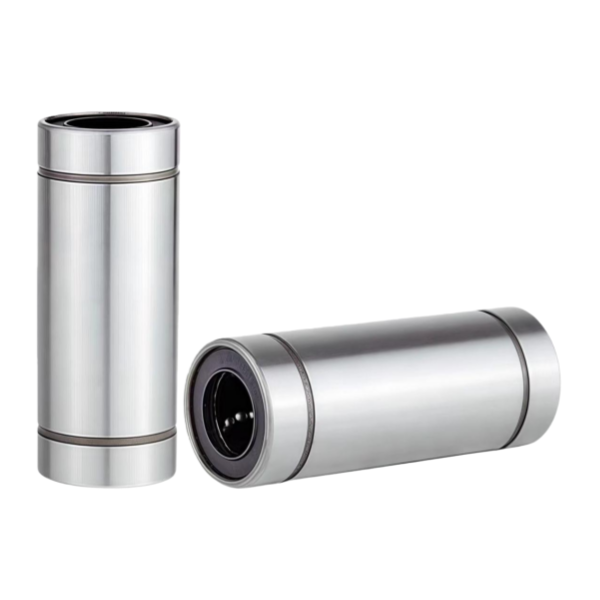
Linear guides and linear guide bearings are fundamentally two different product components. A linear guide is an accessory track that transmits motion, providing reciprocating linear motion from a specified point to the next. The appearance of linear guide bearings and linear guides is significantly different: the guide shaft of a linear guide bearing is cylindrical, while the shaft of a linear guide is square.
Linear shafts are a linear motion system used in conjunction with linear bearings and cylindrical shafts. Because the load-bearing balls make point contact with the bearing outer ring, the steel balls roll with minimal friction. Therefore, linear shafts have low friction and are relatively stable, not changing with bearing speed, allowing for sensitive, high-precision, and smooth linear motion. However, linear shafts also have limitations, primarily their poor impact load capacity and low load capacity. Secondly, linear bearings experience significant vibration and noise at high speeds.
Linear guide bearings and linear guides have similar functions, both providing support and guidance. The main difference lies in their installation location. Linear guide bearings are typically fixed at both ends, with the connecting component in the center surrounding all or most of the shaft radially. The linear guide itself is usually mounted with one side completely in contact with the equipment's mounting base and secured with bolts.